The MTL Framework
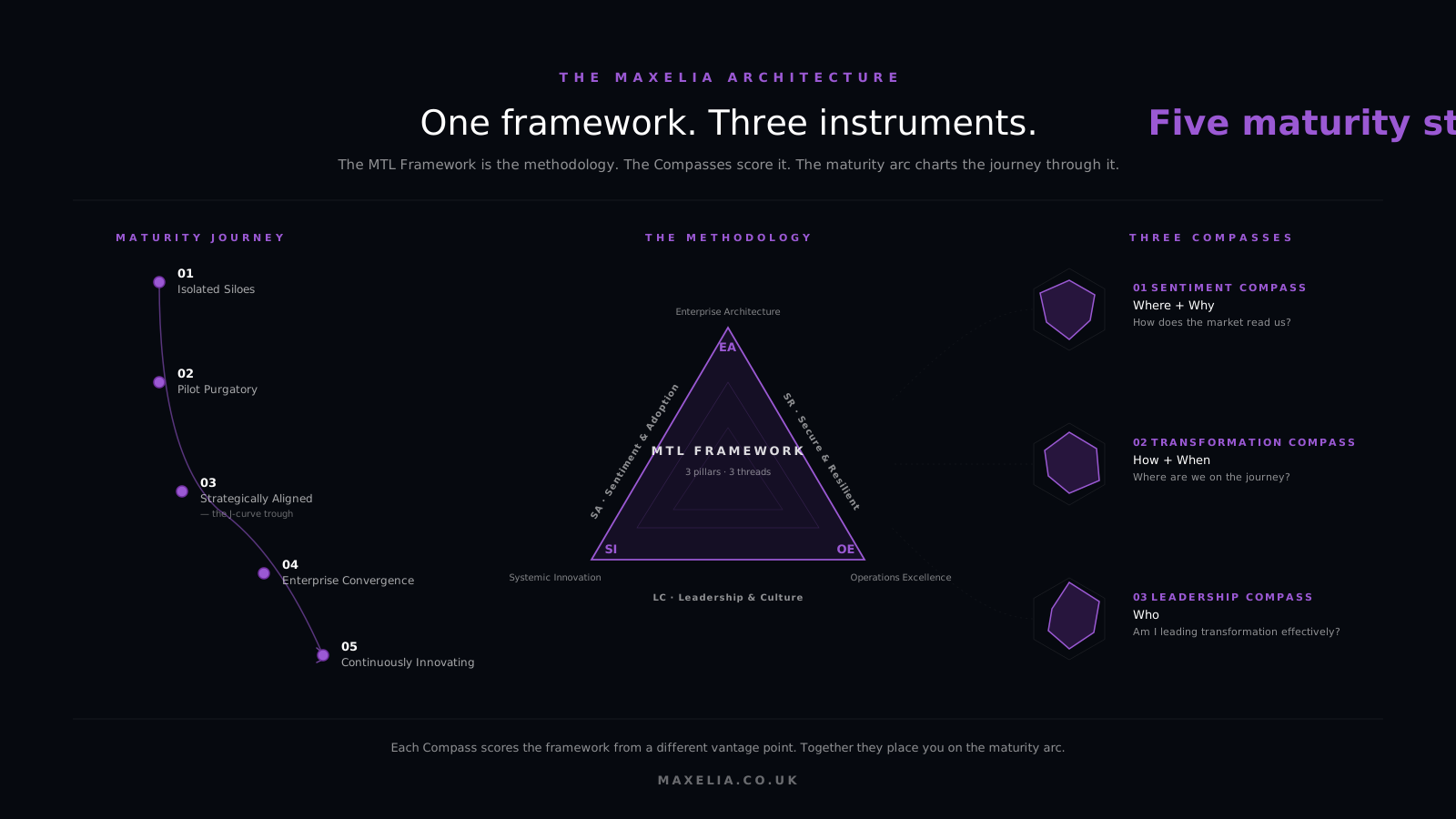
The Maxelia Transformation Lifecycle is the structural framework all three Compasses score against. Three pillars hold up the enterprise. Three threads run through everything. Five maturity stages chart the journey. One J-curve sets expectations for the trough you have to walk through.
The MTL Framework is the answer to "how do we know the methodology is real, not just brand wrapping?" This is the structure underneath every Compass instrument, every diagnostic engagement, and every roadmap delivered. It was built inside transformation programmes, not above them.
The three pillars
The pillars are the load-bearing elements of the framework. Each is independent enough to be assessed on its own and interdependent enough that weakness in one shows up as weakness in the others.
Pillar · EA
The structural backbone. Documented architecture in active use for investment decisions. Standards adhered to. Target-state articulated and maintained. Without this pillar, every initiative becomes a re-platform.
Pillar · SI
The pathway from pilot to enterprise capability. Innovation measured by business outcomes, not pilots launched. Productionisation pathway defined. Without this pillar, the organisation gets stuck in Pilot Purgatory.
Pillar · OE
The delivery muscle. Core processes documented, measured, continuously improved. Operational data trusted and used daily. Without this pillar, transformation never reaches the front line.
The three threads
The threads are the elements that show up everywhere and cannot be solved in isolation. Each one is a discipline. Each one usually surfaces as the binding constraint that makes pillar work fail.
Thread · SA
How the workforce, the market, and the customer base actually receive the change. Sustained-use metrics. Stakeholder maps maintained. Without this thread, the new system goes live and the old habits stay.
Thread · SR
Security and resilience designed in at architecture inception. Business continuity tested under realistic stress. Without this thread, transformation creates the next incident.
Thread · LC
Visible executive sponsorship. Decision rights and SLAs explicit. Culture aligned to the change. Without this thread, the strategy is right and the delivery is absent.
Five maturity stages
The five stages are how the Transformation Compass converts a six-dimension scoring into a placement. Each stage has a named indicator: a typical pattern that organisations at that stage exhibit. The stage placement is the start of the conversation, not the end of it.
01
Functions running independent transformations with no shared architecture. Investment patterns reflect departmental priorities, not enterprise direction.
Typical pattern: Multiple parallel ERP rollouts. Three competing data lakes. The CFO and the COO cannot agree on a single source of truth.
02
Multiple successful pilots, none scaled. Productionisation pathway absent or undefined. Investment continues; enterprise capability does not emerge.
Typical pattern: Three years of analytics PoCs, none in production. Vendor relationships sticky. Innovation budget growing while value delivery flat.
03
Strategy is documented and broadly understood. Direction without momentum. The slide deck is right; the delivery is not yet matching.
Typical pattern: The transformation programme has a name, a sponsor, and a roadmap. The board approved it. The delivery team is six months behind plan and nobody is sure why.
04
Functions sharing architecture, data, and operating models. Integration is the dominant pattern. Investment decisions cross departmental lines.
Typical pattern: One source of truth for customer, product, supplier. Data governance has teeth. New initiatives plug in rather than re-build.
05
Transformation is the operating mode, not a programme. The organisation generates and absorbs change as a continuous capability.
Typical pattern: Stage 5 is the destination. Few organisations live here permanently. The MTL Framework is designed to get the organisation here, then keep it here.
The J-curve
Every meaningful transformation moves through a trough. The old way is being dismantled while the new way is not yet producing. Adoption lags. Sponsors get nervous. Champions look for cover.
The J-curve is the framework's way of setting expectations honestly. A successful transformation is not a smooth upward line. It is a dip, then a recovery, then growth above the original baseline. The dip is when Conviction (Leadership Compass) and Communication (Leadership Compass) get tested most.
Knowing the J-curve is coming changes how the programme is planned, communicated, and sponsored. Programmes that pretend the J-curve does not exist tend to be cancelled at the bottom of it.
How the Compass System uses this framework
The MTL Framework is what gives the Compass System something real to score against. Each Compass measures different elements of the framework, each from a different angle. The result is one integrated diagnostic, not three loosely related instruments.
Sentiment Compass
Reads how the market receives your proposition. Maps to Sentiment & Adoption thread, Enterprise Architecture pillar (proposition coherence), Secure & Resilient thread (sustainability of strategic direction).
Transformation Compass
Scores all six dimensions of the framework directly: three pillars and three threads. Places the organisation on the five-stage maturity arc. The most direct read of where you sit.
Leadership Compass
Scores the leader against the Leadership & Culture thread specifically. Predicts whether the leadership pattern can get the organisation through the J-curve trough.
Get Started
The Transformation Compass Lite uses twelve questions to score you against the six framework dimensions and place you on the maturity arc. Free, indicative, yours to keep. The full Diagnostic uses thirty rubric-anchored indicators with cross-functional input.